
The Ground Beneath the Tri-Cities: Soil, Limestone and Rain
To understand why foundations move in Johnson City, Kingsport and Bristol, you have to look down. The ground here is not the uniform, predictable stuff of the coastal plains; it is a layered mix of clay, weathered rock and limestone bedrock, soaked by generous rainfall and worked over by decades of grading and building. This page explains how East Tennessee soil affects foundations, and what that means for the house sitting on top of it.
Clay Soils: The Swelling Problem
Much of the Tri-Cities area has clay-rich soil, and clay is a difficult neighbour for foundations because its volume changes with moisture. When the soil is wet, clay particles absorb water and the ground swells, pressing laterally against basement walls and lifting lightly loaded slabs. When it dries, the soil shrinks and pulls away, leaving voids beneath footings and slabs that then settle under the building's weight.
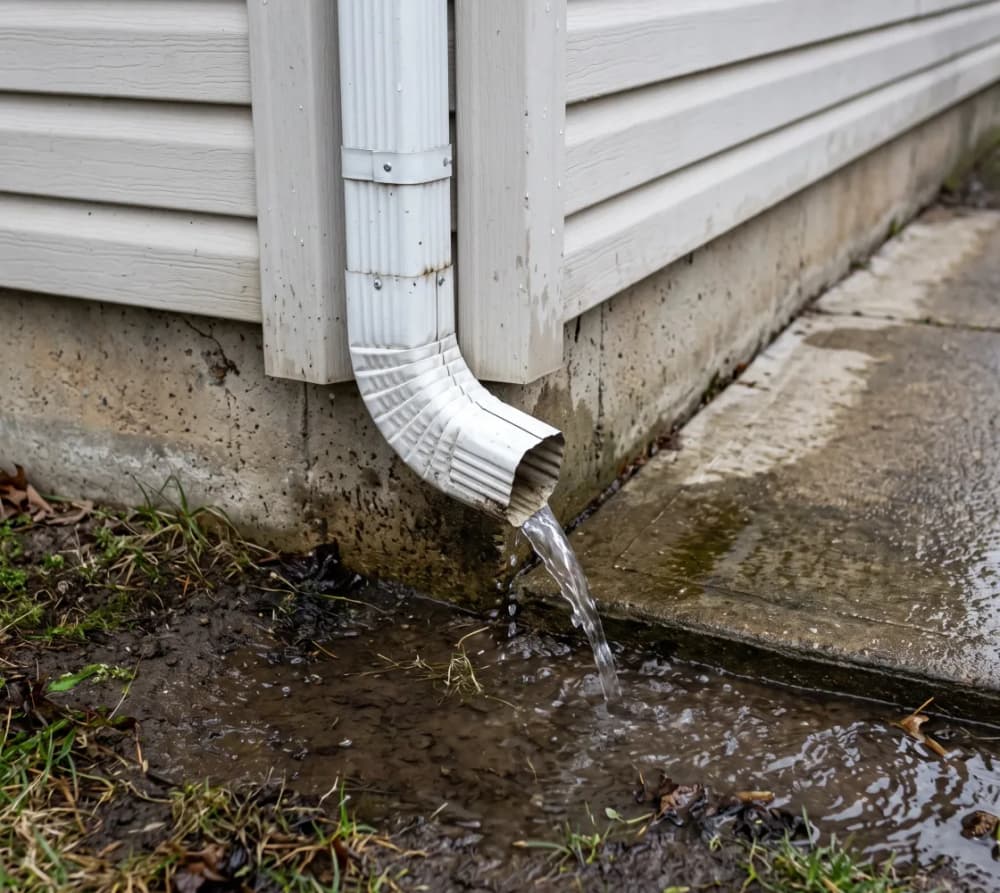
This shrink-swell cycle repeats every year, and its effects accumulate. A foundation does not fail in one dramatic season; it is worked loose over decades of wetting and drying. The process accelerates wherever drainage concentrates water in one spot, such as beneath a downspout that discharges beside the foundation, or where grading slopes towards the house instead of away from it.
Limestone Bedrock: Strength With Surprises
Below the soil, much of East Tennessee rests on limestone bedrock, and limestone brings its own behaviour. Slightly acidic groundwater dissolves limestone very slowly, over geological time forming the caves and sinkholes the region is known for. On the scale of a single house lot, the practical effect is uneven bearing: bedrock may lie a few feet down on one side of a lot and much deeper on the other, with soft pockets of weathered material in between.
A foundation that bears partly on solid rock and partly on compressible soil will settle differentially, and differential settlement is the engine behind stair-step cracks, racked door frames and sloping floors. This is also why pier depths vary so much from house to house here: a pier must reach genuinely stable material, and "stable" can be ten feet down on one street and thirty on the next. It is one reason reputable contractors in this region test or probe before quoting pier work.
43.97 Inches of Rain: The Driving Force
The Tri-Cities receives around 43.97 inches of precipitation in a normal year, based on 1991 to 2020 station normals, and the distribution matters as much as the total. Heavy spring rains saturate the clay just as the ground is warming, and intense summer storms dump inches in hours, overwhelming gutters and grading. Each event loads the soil against foundation walls and feeds the shrink-swell cycle.
Consider what a typical roof does in a one-inch storm: a 2,000-square-foot roof sheds well over a thousand gallons of water. If the gutters discharge that water beside the foundation, it is the equivalent of aiming a fire hose at the most vulnerable part of your house several dozen times a year. This is why drainage improvements punch so far above their cost. Extending downspouts, regrading and keeping gutters clear do not just reduce dampness; they remove the driving force behind a large share of structural movement.
Graded Lots and Fill Settlement
The third ingredient is human-made. Tri-Cities neighbourhoods built from the mid-20th century onwards often sit on graded lots where soil was cut from one area and used as fill in another. Fill consolidates slowly, over decades, particularly when it was not compacted in thin layers during construction. A house built partly on cut and partly on fill can experience exactly the differential settlement that cracks walls and racks frames.
There is no way to un-build a graded lot, but knowing your house sits on one changes how you interpret symptoms. Gradual, even settlement of a few decades' standing may simply need monitoring and good drainage, while new or accelerating movement deserves professional assessment. Old-timers in the neighbourhood are an underrated resource: ask how long a crack has been there before assuming it is new.
Working With the Ground You Have
You cannot change the geology, but you can change how water interacts with it. The hierarchy of sensible action runs from cheap to expensive: first manage surface water with gutters, downspout extensions and grading; then address any interior dampness with dehumidification and sump systems; and only then consider structural interventions like piers or wall reinforcement. Many homeowners are surprised how far the first step goes.
When structural work is genuinely needed, the local geology actually offers an advantage: limestone bedrock, once reached, provides superb bearing for piers. A properly engineered piering job in this region is a permanent fix, not a patch. The key is diagnosis by someone who understands local soils, which is why homeowner education matters. Resources like tricitiesfoundationrepair.com exist to help Tri-Cities residents understand their ground before they spend money on it.
The takeaway: clay that swells and shrinks, limestone that bears unevenly, and nearly 44 inches of annual rain form the classic Tri-Cities foundation challenge. Manage water first, monitor symptoms with dated photographs, and get local expertise before committing to structural work.